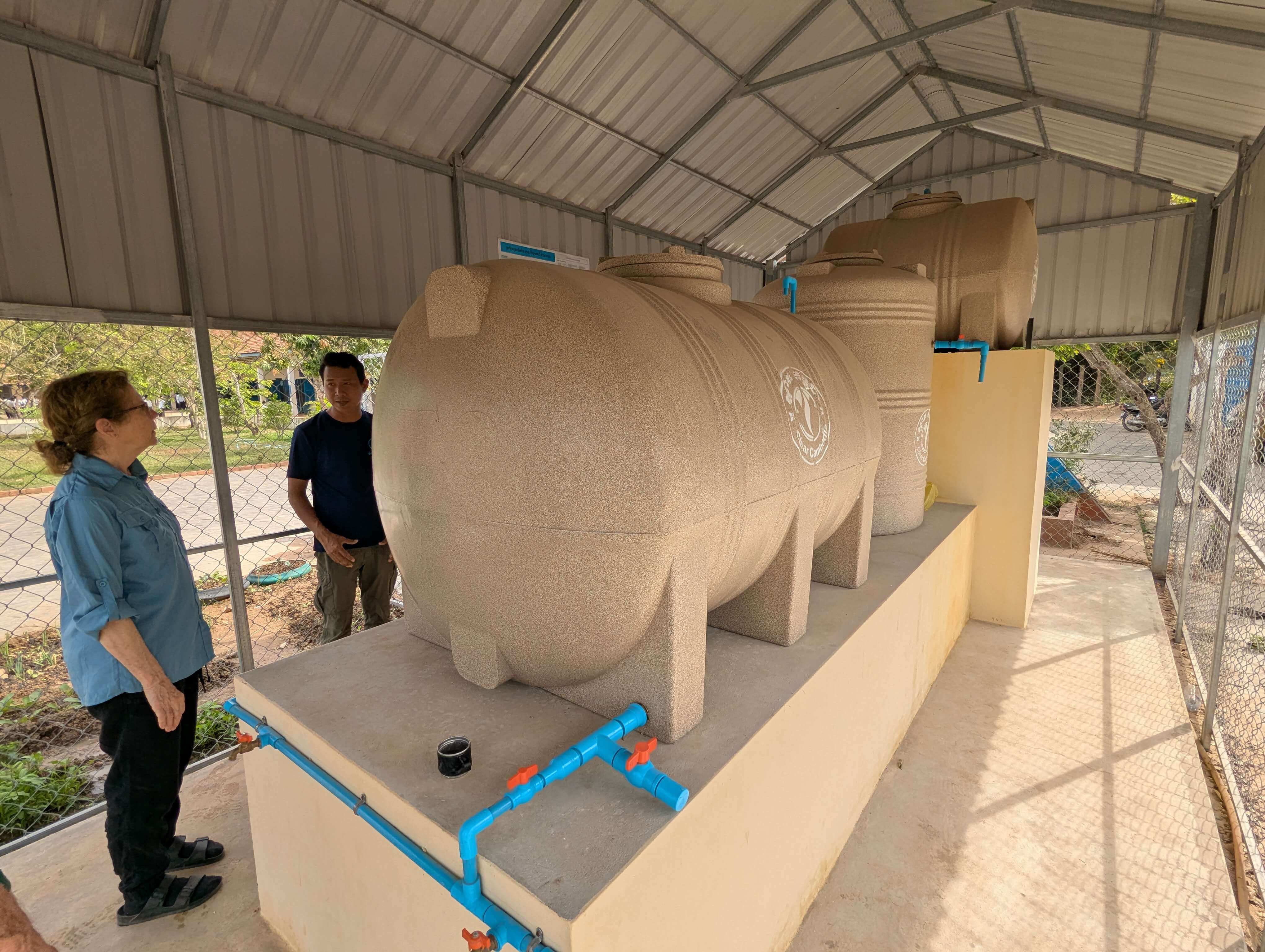
Large Capacity water filter systems used by Water for Cambodia
Below are descriptions of the two large capacity water filter systems used by Water for Cambodia. Each has advantages for specific situations.
Multi-Stage Water Filtration System
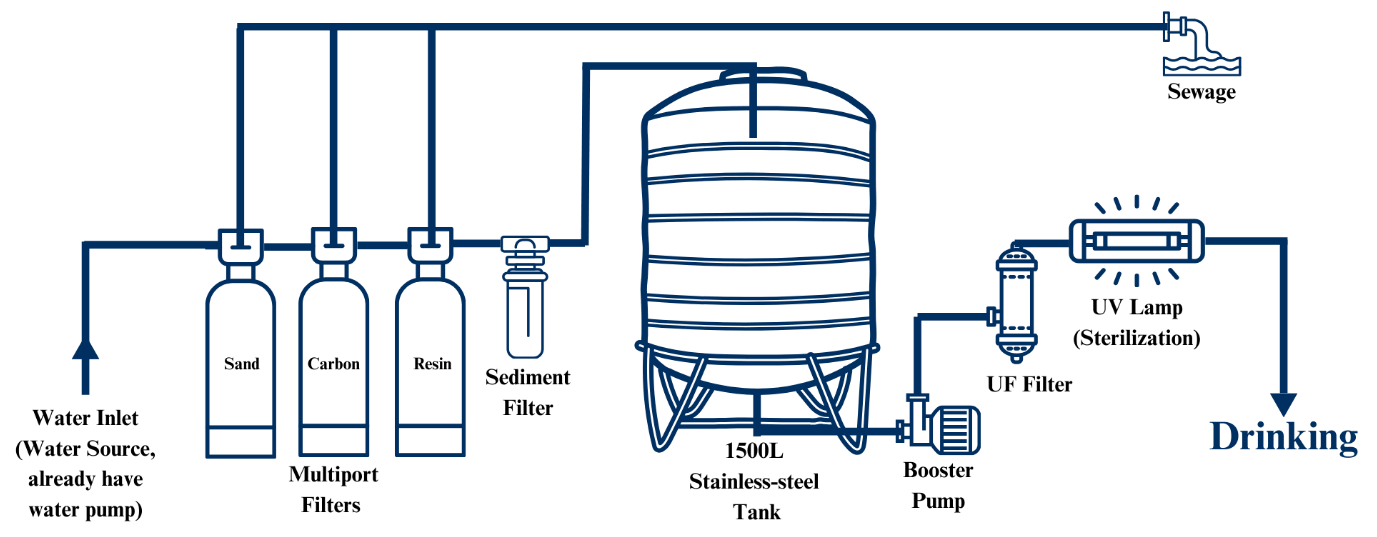
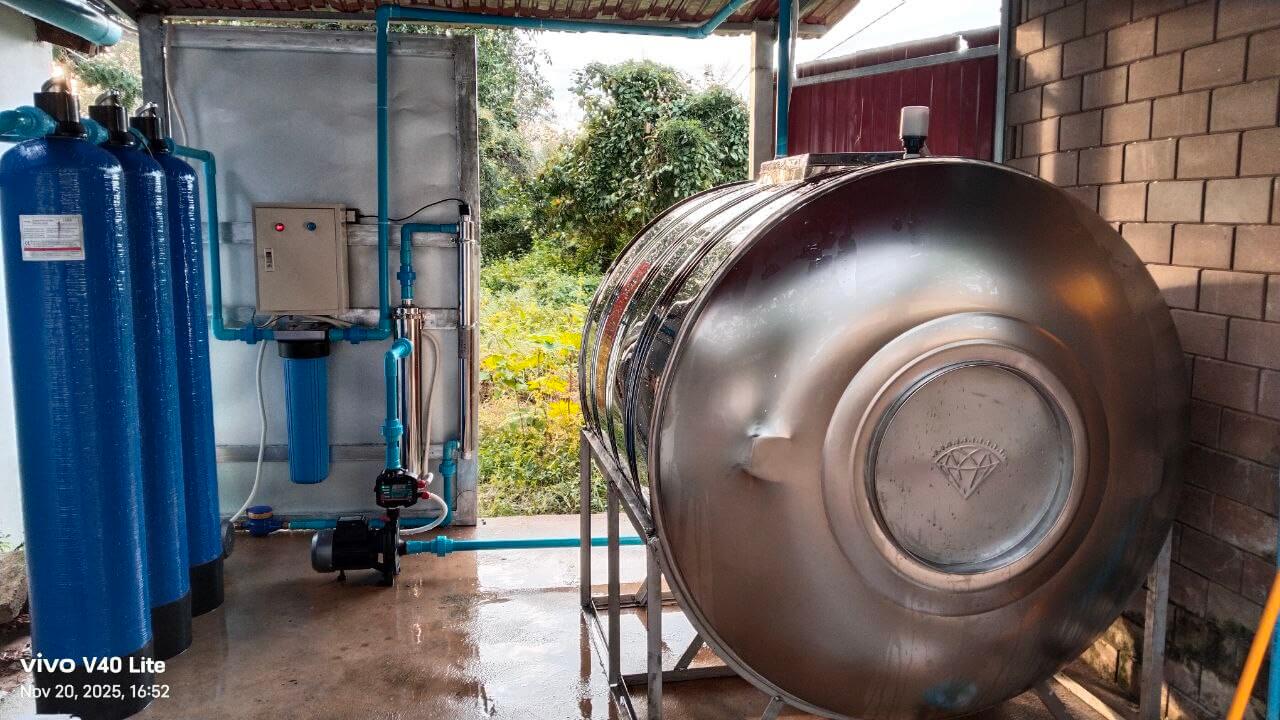
Our latest initiative features a high-capacity, multi-stage water filtration system designed to provide safe, high-quality drinking water to the communities we serve. This comprehensive system is engineered for efficiency, boasting a production capacity of 1,000–2,000 liters of purified water per hour. It utilizes an advanced eight-stage treatment process—starting with sand, carbon, and resin filtration to remove turbidity, odors, and hardness, followed by 5-micron sediment polishing. The water is then stored in a food-grade 1500L stainless steel buffer tank before undergoing final microbiological purification through an Ultrafiltration (UF) membrane and UV sterilization.
This robust infrastructure is built for long-term sustainability and reliability. The system is designed to meet recognized drinking water quality standards, making it ideal for residential, commercial, and small community applications. To ensure the longevity of the equipment, we have established a rigorous maintenance schedule, including monthly inspections and the replacement of critical components like the UV lamps and UF membranes every few years. With an estimated installation timeline of just seven days, our trained technicians can rapidly deploy this life-changing technology, providing a consistent and dependable supply of clean water where it is needed most.
Intermittently Operated Slow Sand Filter (iSSF)
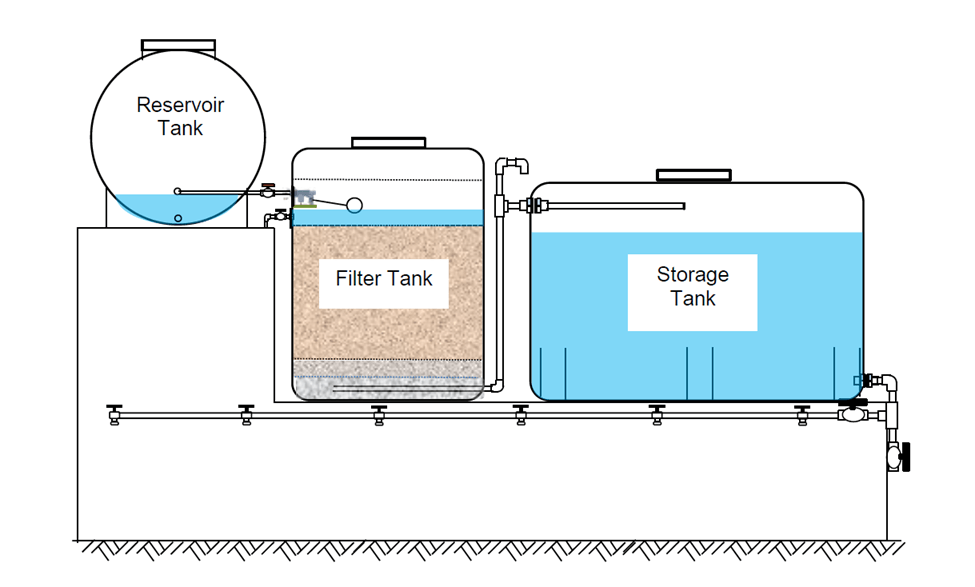
The Intermittently Operated Slow Sand Filter (iSSF) is a highly effective, nature-based water treatment solution designed to provide clean, safe water for communities and schools. By utilizing a specialized sand bed with an effective depth of 0.6 to 1.0 meters, the iSSF excels at transforming raw water into a high-quality resource. This system is particularly celebrated for its ability to significantly improve water taste and clarity while reliably reducing bacteria and protozoa. Its design allows for flexible operation, maintaining a steady filtration rate of 100–200 L/m²·h through resting periods that support a healthy, active biological layer for natural purification.
What makes the iSSF an ideal choice for community-led projects is its simplicity and long-term sustainability. Maintenance is straightforward and manageable: a simple scraping of the top 2–3 cm of sand is only needed when flow slows, and a full sand replenishment is required only every few years. Because it relies on gravity and natural filtration processes, it is a robust and dependable system for areas where raw water quality is moderate. By installing an iSSF, communities can take charge of their own water health with a proven, low-maintenance technology that delivers consistent results year after year.